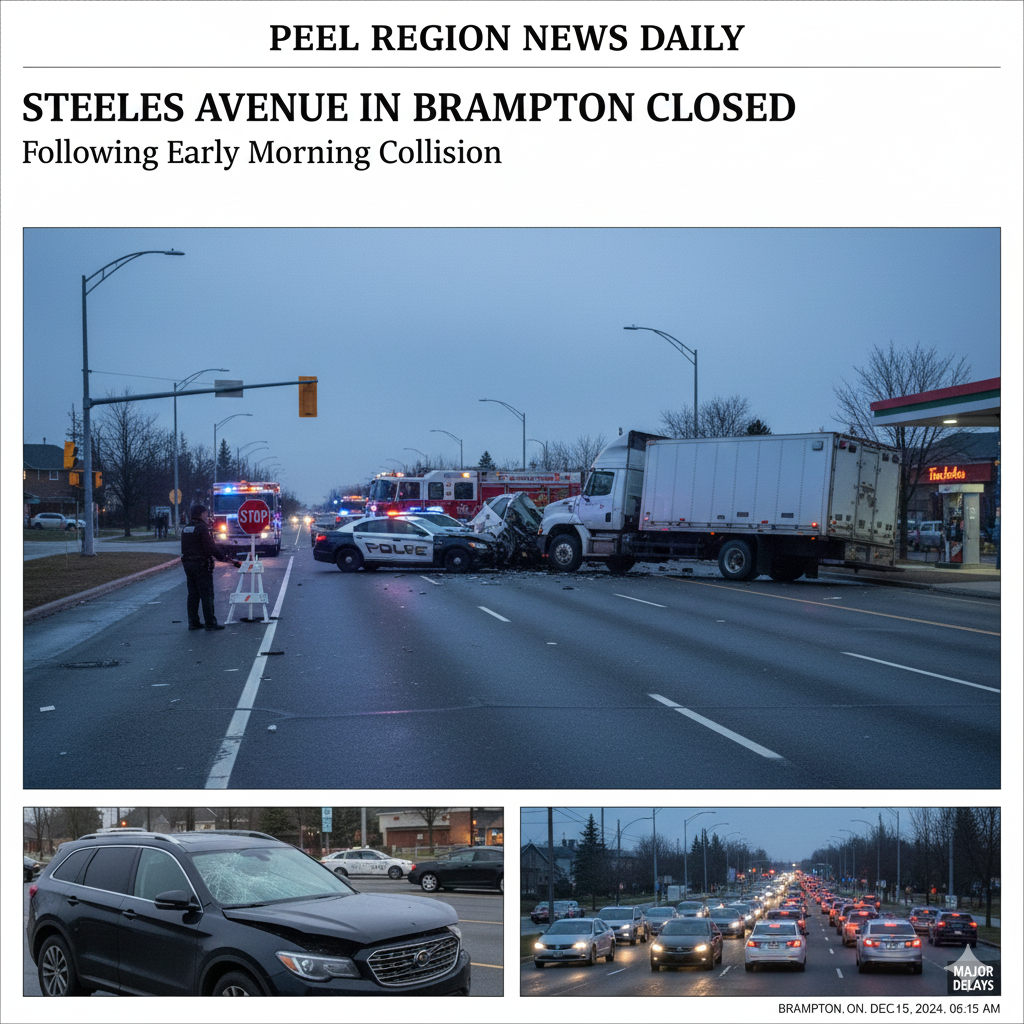
Steeles Avenue in Brampton Closed Following Early Morning Collision

Two-Vehicle Crash Shuts Down Eastbound Lanes

Brampton residents faced traffic delays on Monday morning as a section of Steeles Avenue was temporarily closed following a two-vehicle collision.

According to Peel Regional Police, the crash occurred at approximately 7 a.m. on December 1 at Castleview Drive. The incident prompted the closure of the eastbound lanes of Steeles Avenue at Goreway Drive to allow officers to investigate the scene safely.

Police Investigation Underway

Peel police confirmed that emergency services responded promptly to the collision. Drivers are advised to avoid the area and seek alternate routes while the investigation and clean-up are ongoing.

No further details regarding injuries or the condition of those involved have been released at this time. Authorities continue to assess the scene, and lane reopenings are expected once the investigation concludes.

Traffic Disruptions in the Area

Motorists traveling through the area during morning commute hours experienced delays due to the partial road closure. Police continue to monitor traffic flow and are urging drivers to exercise caution near the site.

Residents and commuters are encouraged to stay updated via local traffic advisories or follow Peel Regional Police for further information on road conditions.

Peel Parents Struggle as Before and After School Program Waitlists Surge, Advocacy Groups Call for Action

Shortage of BASP Spaces Leaves Hundreds of Parents in a Bind

For many parents in Peel Region, securing before and after school care has become a critical challenge, forcing them to reconsider career plans and rely on unlicensed child care providers. The ongoing shortage of licensed spaces in the region’s Before and After School Programs (BASP) has left families navigating long waitlists, uncertain availability, and rising costs.

Registered nurse Nicola Montgomery, who went on maternity leave last year, said she never imagined her career might be disrupted by child care availability.

“As it stands right now, I can’t go back,” Montgomery said. “I took an 18-month leave because I wasn’t sure I’d get child care. I would love to go back to the operating room, but I have to find something that works around school hours.”

Montgomery’s experience is not unique. Hundreds of families in Peel rely on BASP to bridge the gap between the school day and work, but demand continues to outpace supply.


Current Waitlist Situation in Peel Region

Peel Region began validating waitlist data for BASP in May 2024. According to the most recent data for the 2024–25 school year, 1,470 children are currently waiting for placement in licensed programs. Families often register their children on multiple program waitlists in hopes of securing a spot, making it difficult to determine the precise number of children affected.

While the region has 342 licensed BASP sites, the lack of a centralized waitlist means the full scope of the problem remains uncertain. The main providers in Peel include:

  • PLASP Child Care Services: Approximately 890 children on its waitlist.

  • Family Day Care: Around 290 children waiting.

  • YMCA of Greater Toronto: 124 children on waitlists.

Mississauga mother Anjali Rego highlighted the challenge firsthand when her older daughter lost her PLASP spot after changing schools.

“We needed to shift her spot to the new school, but PLASP didn’t allow that,” Rego explained. “We’ve had to rely on an unlicensed home child care provider for her while our younger daughter remains in the program. Families need safe, on-site care instead of depending on unlicensed options.”


Rising Demand Amid Limited Supply

The demand for school-age child care has surged as parents return to in-person work, yet the availability of BASP spaces is shrinking. Carolyn Ferns, public policy co-ordinator at the Ontario Coalition for Better Child Care (OCBCC), described the situation as a “perfect storm.”

“Parents are being asked to return to offices, but school-age child care spaces are going down while fees continue to rise,” Ferns said.

Federal and provincial initiatives such as the Canada-Wide Early Learning and Child Care (CWELCC) program have successfully capped preschool fees at $22 a day, providing relief for younger children. However, school-age children were excluded from this funding model, leaving families struggling with high BASP costs despite lower preschool fees.

The financial pressure has forced many parents to turn to unlicensed care providers or manage pickups themselves rather than enroll their children in formal programs. Providers are also facing economic constraints; programs for school-age children are increasingly financially unviable, and spaces continue to close.


Staffing Shortages Complicate Expansion Efforts

According to a PLASP spokesperson, expanding BASP programs involves balancing waitlists, staffing, licensing, and regulatory requirements. Staffing shortages remain a key challenge. Early childhood educators (ECEs) often earn around $23.86 an hour while working split shifts with unpaid gaps, making recruitment and retention difficult.

“It’s hard to staff programs where educators work mornings and afternoons with hours in between,” Ferns said, noting that Ontario’s lack of a provincial wage grid worsens the issue.

The YMCA of Greater Toronto has increased licensed BASP spaces at 21 locations but is constrained by staffing ratios and licensing limits. While the region provides funding, school boards are legally responsible for ensuring BASP spaces are available where there is “sufficient demand,” though the term is undefined and no mandatory number of spots exists.


School Boards’ Role and Limitations

David Green, chair of the Peel District School Board (PDSB), acknowledged parental frustration but emphasized the board’s limited role.

“Our responsibility is to provide space in schools, but staffing, funding, and licensing remain the provider’s responsibility,” Green said.

Similarly, the Dufferin-Peel Catholic District School Board (DPCDSB), which partners with PLASP, YMCA, and Family Day, reported waitlists at multiple sites. A spokesperson confirmed the board is monitoring demand and working with the region to open new programs when staffing and enrolment permit.


Advocacy Calls for Policy Change

Advocates argue that the fragmented approach to child care has contributed to inequities, particularly for school-age children. The OCBCC’s September 2025 report, Roadmap to Universal Child Care in Ontario, highlights the gap in CWELCC coverage and urges integration of school-age programs into the provincial framework.

“Leaving school-age care out of CWELCC was a policy mistake,” Ferns said. “Families need a system that’s affordable, equitable, and available when they need it.”

The coalition recommends a provincial wage grid of $35–$45 per hour with benefits and pensions to retain qualified ECEs, alongside dedicated funding for school-age child care.


Provincial Funding and Programs

The Ontario Ministry of Education emphasized record investments in affordable child care and recently launched a Workforce Strategy aimed at improving wages and working conditions. The Ministry of Sport, responsible for BASP, announced a $43.9 million investment over three years to support after-school programs for 13,000 children provincewide.

Non-profits such as the YMCA and Boys and Girls Clubs will receive funding for recreation and tutoring programs, but PLASP has not been allocated any provincial funding, leaving questions unanswered about eligibility criteria and distribution.


Families Turn to Unlicensed Care

For many parents, the lack of accessible, licensed BASP options has meant turning to unlicensed home daycare providers. Mississauga mother Leah Rosalak described the stress of navigating this system:

“We waited more than a year to enrol our daughter, only to be put back on the waitlist on registration day. We eventually had to turn to an unlicensed provider. Even though she was trustworthy, not every family is so fortunate. It’s a difficult position to be in — leaving children with someone unknown and unlicensed.”

Rosalak’s daughter feels excluded seeing classmates in the school program, highlighting the emotional as well as logistical impact of the BASP shortage.


Conclusion: Urgent Need for Reform

The BASP waitlists in Peel Region underscore a broader systemic challenge in Ontario’s child care framework. While preschool programs have benefited from CWELCC funding, school-age care remains under-supported, leaving families facing high costs, limited availability, and uncertain staffing.

Advocates stress that treating child care as essential infrastructure, rather than a patchwork of programs, is crucial for equity, affordability, and accessibility. Integrating school-age programs into provincial funding, improving wages for educators, and expanding licensed spaces could help ensure that families no longer have to compromise their careers or children’s well-being due to a shortage of care.

It Sold for WHAT?!” Ontario Real Estate Expert Explains the Secrets to Successful Home Pricing

Real estate agent Lindsay Smith, with nearly 40 years of experience in the Ontario market, explains why overpricing a home is the silent killer in today’s real estate environment—and how strategic pricing can make all the difference.

The Three Realities of Every Real Estate Market

Every month, three scenarios play out in housing markets:

  1. Homes come on the market.

  2. Homes sell successfully.

  3. Homes quietly expire because the asking price is disconnected from reality.

While some listings fail due to personal circumstances, most unsold homes suffer from one root cause: an unrealistic asking price.

Half the street nods approvingly when a home sells; the other half erupts in disbelief: “It sold for WHAT?!”

Over decades, Smith has observed one universal truth: underpricing rarely hurts, but overpricing can doom a listing.

Why Overpricing Is the “Silent Assassin”

Homes listed significantly above market value fail to attract buyers. They sit idle, age, and become “stale,” prompting potential buyers to ask, “What’s wrong with this house?” The market quickly punishes overconfidence.

In contrast, underpriced homes attract crowds, spark competition, and often sell for—or above—their true market value within hours.

How Smart Pricing Works

Accurate pricing is straightforward, though it requires discipline:

  1. Analyze recent sales of similar homes—not wishful thinking, but real, completed transactions.

  2. Evaluate current competition, because buyers compare listings constantly.

  3. Adjust for market shifts since those sales closed, ensuring the price reflects today’s reality.

Using outdated data or guessing high is a fast track to expired listings and wasted time.

Durham Region Case Study

Recent numbers in Durham Region highlight the current market dynamics:

  • 715 homes sold last month.

  • Average time on market: 47 days; final successful listing period: 29 days.

  • Homes sold for about 98% of the asking price, showing buyers still negotiate but the market is not overheated.

Agents often price with a strategic cushion—for instance, if a home’s market value is $850,000, it might be listed at $890,000 to allow for a natural reduction to the final sale price. But this only works if the baseline value is accurate and realistic.

Example: Townhome Pricing

Consider a Durham Region townhome:

  • 1,060 sq. ft., freehold, two bedrooms, 1.5 baths, single garage, good but not renovated.

  • Nearby three-bed/three-bath homes sold for $670,000–$679,000.

  • Another upgraded three-bed/three-bath sold for $662,000.

The subject townhome lacks the third bedroom, third bathroom, and renovations. Its realistic market value: $620,000–$630,000.

Human Nature and Market Realities

Many failed listings stem from psychology:

  • Agents quote high to win a listing.

  • Sellers “try higher” based on anecdotal advice.

In last month alone, 180+ Durham listings expired unsold, mostly due to overinflated asking prices rather than bad luck.

Today’s market is balanced, not the hypercompetitive seller’s market of 2021. Using old pricing strategies now can backfire quickly.


Bottom Line:
To sell successfully, price with realism, consider market conditions, and resist the temptation to chase a number that doesn’t match your home’s true value. Overpricing is the quiet killer; smart, strategic pricing is the key to attracting buyers and closing the sale.

Community Raises $2.45 Million at Gala to Support Brampton’s New Peel Memorial Hospital

Brampton’s Peel Memorial Centre received a $2.45-million gift to support its transformation into a full-fledged hospital, celebrating the facility’s 100th anniversary.

Gala Celebration Marks Centennial Milestone

The funds were raised at the Next 100 Gala on November 22, hosted by the William Osler Health System Foundation. Canadian comedian Jessica Holmes emceed the black-tie event, which featured performances by iconic ‘80s bands Naked Eyes and Men Without Hats.

As part of the centennial celebrations, members of the Centenary Circle program collectively contributed $1.8 million throughout the year, further boosting Peel Memorial’s fundraising efforts.

Supporting the Next-Generation Hospital

The new Peel Memorial Hospital will include inpatient beds, a 24-hour emergency department, and expanded outpatient services, according to a news release from William Osler Health System.

“Together, we are transforming Peel Memorial into a next-generation hospital that will serve our community with excellence for years to come,” said Dr. Frank Martino, president and CEO of William Osler Health System.
“These funds will help expand programs, address the significant need for more specialized care, and support a growing population, ensuring patients receive the care they need, when and where they need it most.”

Major Development Milestone

The gala follows a major project announcement made last month. The Ontario government, through Infrastructure Ontario, and William Osler Health System signed a development phase agreement with Bird Design-Build Construction to advance the design, scheduling, and pricing for the new Peel Memorial Hospital.

Peel Memorial’s Legacy

Peel Memorial originally opened in 1925 as a 12-bed hospital serving a community of just 3,000 residents. Today, it is part of the William Osler Health System, which also includes Brampton Civic Hospital and Etobicoke General Hospital, serving thousands of patients across the region.

Coroner’s Inquest Announced for 2020 Death of Jamal Francique in Mississauga

The Coroner’s Office has confirmed that an inquest will be held into the death of 28-year-old Jamal Francique, who was fatally shot by Peel Regional Police in Mississauga in 2020. The inquest will examine the circumstances surrounding his death.

Background of the Case

Jamal Francique was shot and killed on January 7, 2020, during an attempted arrest near Southampton Drive and Aquinas Avenue. Officers were responding to breach-related offences connected to drug investigations, according to the Special Investigations Unit (SIU) report.

Following the incident, Francique’s family filed a $101-million lawsuit. After a year-long investigation, the SIU concluded that there were no grounds to charge the subject officer involved in the shooting.

Details About the Inquest

The Coroner’s Office has not yet announced the exact date or location of the inquest. A spokesperson stated that:

“The inquest team is currently working to determine dates that can accommodate all parties and witnesses. In general, inquests are held in the jurisdiction where the death occurred, although many of our inquests are now held virtually.”

The inquest is mandatory under the Coroners Act and will allow a jury to examine the circumstances of Francique’s death. The jury may also make recommendations aimed at preventing further deaths in similar situations.

Purpose of the Inquest

Inquests are designed to provide transparency and accountability in cases of deaths involving police and other public authorities. While they do not assign criminal or civil liability, they aim to identify systemic issues and suggest measures to prevent future incidents.

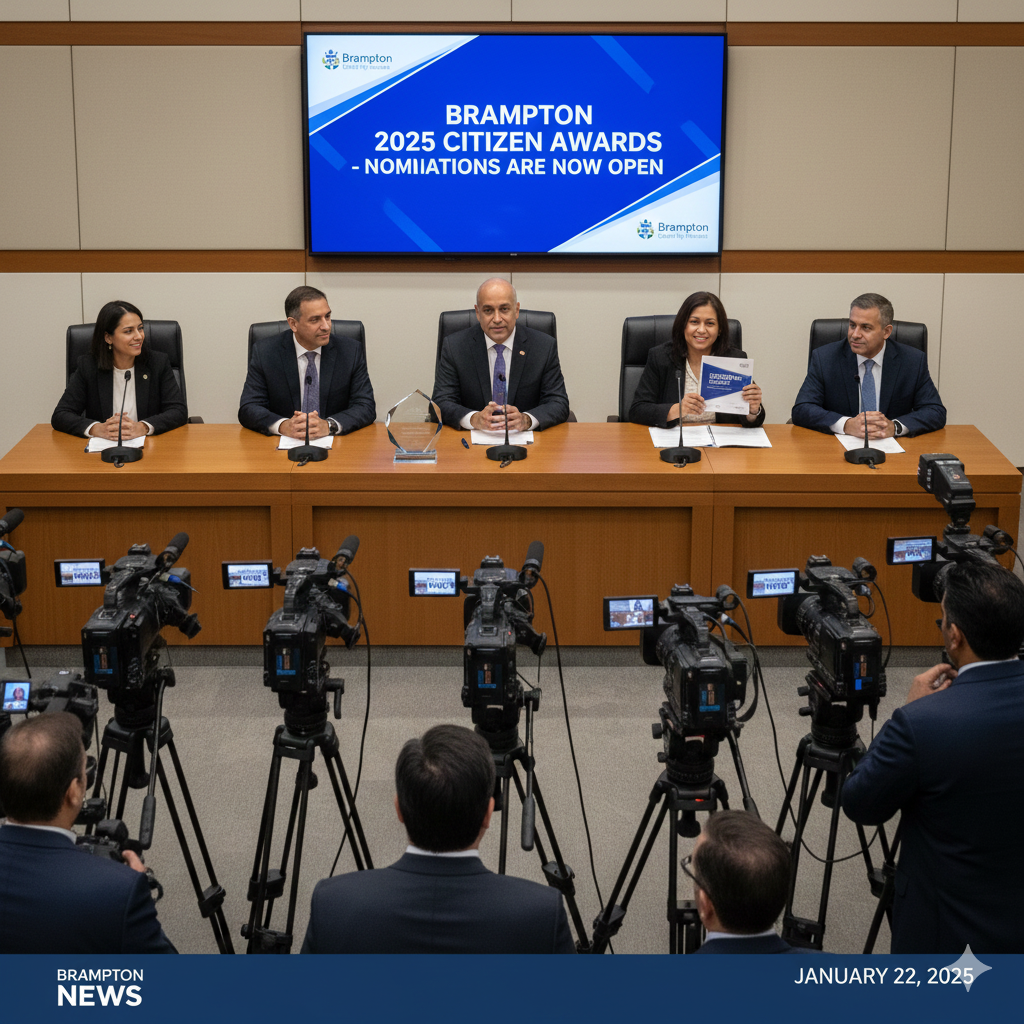
Nominations Now Open for Brampton’s 2025 Citizen Awards

Brampton residents are encouraged to nominate outstanding athletes, artists, volunteers, and local heroes for the 2025 Citizen Awards. Submissions are open until January 9, 2026, recognizing those who have made a significant impact on the community throughout 2025.

Celebrating Brampton’s Community Spirit

The Citizen Awards honor individuals who have demonstrated excellence across sports, arts, and community service. According to a city news release, the awards reflect the spirit and values that make Brampton a vibrant and connected community.

“Brampton’s greatest strength has always been its people,” said Mayor Patrick Brown. “Every day, residents across our city give their time, talent, and heart to help others—from our young athletes and emerging artists to our dedicated volunteers and community champions.”

Award Categories

Brampton’s 2025 Citizen Awards feature several distinct categories, each recognizing exceptional contributions:

Sports Achievement Award — Individual and Team

This award recognizes Brampton athletes or sports teams who have excelled at the provincial, national, or international level.

Ken Giles Amateur Athlete of the Year Award

Presented in partnership with the Brampton Guardian, this accolade honors an amateur athlete whose dedication, excellence, and sportsmanship have made a lasting impact on the community.

Arts Acclaim Award

Celebrates artists and creators whose work has achieved local, provincial, national, or international recognition.

Long-term Service Award

Recognizes individuals whose volunteer efforts have strengthened Brampton’s recreational, artistic, or social programs over many years.

Inspirational Award

Honors residents whose compassion, advocacy, or leadership has positively affected the lives of others.

Emergency Services Award of Valour

Selected by Brampton Fire and Emergency Services, Peel Regional Police, and Peel Paramedics, this award recognizes heroic individuals who risked their lives to save others.

Citizen of the Year Awards

Presented to a youth, adult, and older adult, these awards celebrate individuals who demonstrate exceptional civic spirit and all-around community involvement.

How to Submit Nominations

Residents can nominate deserving candidates by January 9, 2026, through the City of Brampton’s official website. These awards offer a platform to acknowledge those who make Brampton stronger, safer, and more inclusive.

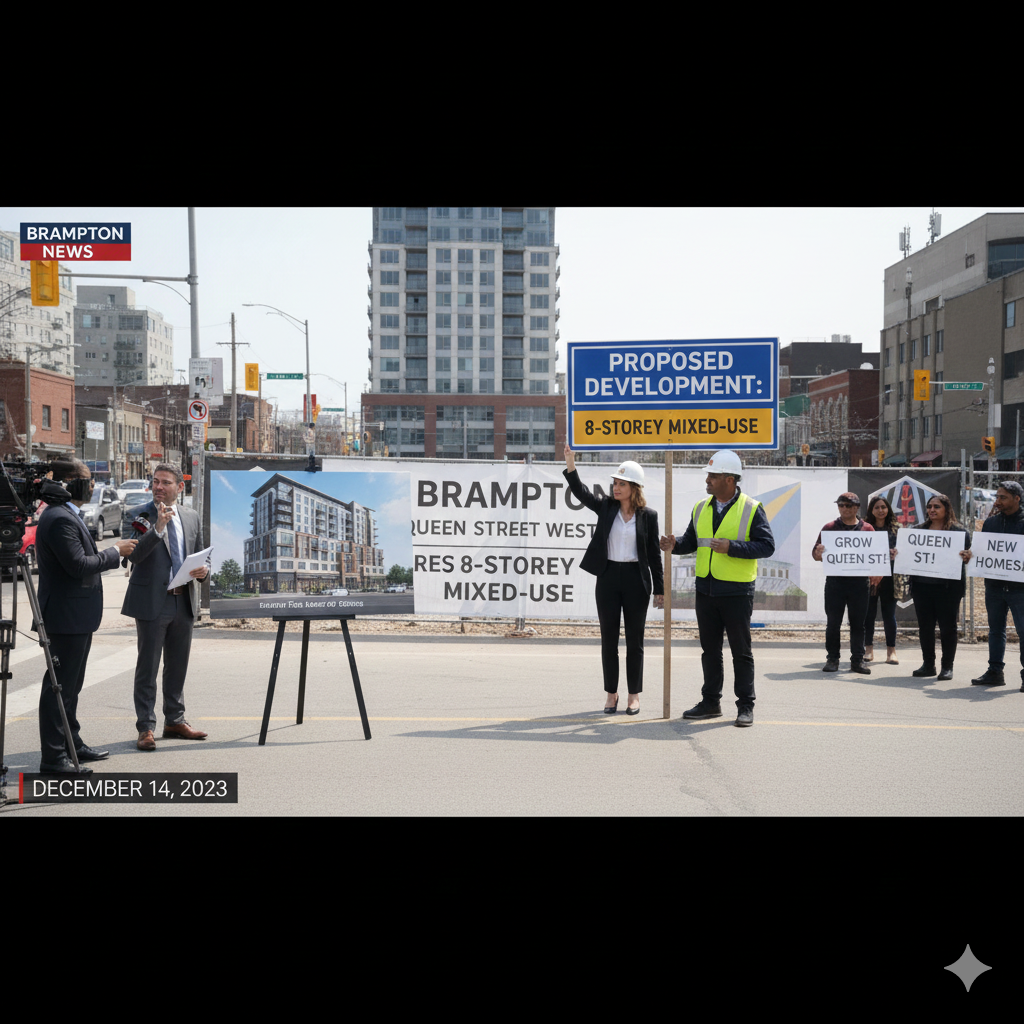
Brampton Eyes 8-Storey Mixed-Use Development on Queen Street West

Brampton is reviewing plans for an eight-storey mixed-use development on Queen Street West, near Creditview Road, that could bring 94 new residential units along with commercial and office space to the west end of the city. The proposed project reflects the city’s ongoing efforts to encourage transit-oriented growth and create complete, inclusive communities.


Details of the Proposed Development

The development, planned for 1453 Queen Street West, is being proposed by Fateh Developments Inc., with the application submitted through Glen Schnarr and Associates Inc. The 0.69-hectare site currently houses a one-storey vacant commercial building, which would be replaced by the new structure.

City staff are recommending that the application to amend the official plan and zoning bylaw to accommodate the development be approved. The proposal is scheduled to be considered at Brampton’s Planning and Development Committee meeting on the evening of December 1.


Building Composition

The eight-storey building would combine residential, retail, and office uses to create a mixed-use environment. According to the city staff report prepared by planner Saghar Massah:

  • Residential Units: Floors three through eight would contain 94 residential units, including 42 one-bedroom and 52 two-bedroom units.

  • Commercial Space: The ground floor would feature 400 square metres of retail space designed to support local businesses and community needs.

  • Office Space: Office areas totaling 973 square metres would be located across the ground and second floors.

  • Affordable Housing: The applicant plans to allocate 10 per cent of the residential units as affordable housing, aligning with the city’s goals to increase accessible housing options.


Planning Considerations

City staff highlighted several reasons for supporting the proposed development:

  • Transit-Oriented Growth: The location along Queen Street West provides excellent access to existing public transit, supporting sustainable urban development.

  • Housing Objectives: By adding 94 residential units, the project contributes to Brampton’s broader housing strategy, addressing both market and affordable housing needs.

  • Community Integration: The mix of retail and office uses is designed to create a complete, vibrant community, promoting interaction and convenience for residents.

  • Environmental Protection: Plans include buffers and mitigation measures to protect adjacent natural heritage features, ensuring the development is environmentally responsible.

  • Infrastructure Efficiency: The proposal is designed to utilize existing municipal infrastructure effectively, avoiding unnecessary strain on city services.


Public Engagement and Concerns

The city’s planning process included a statutory public meeting on April 7, attended by four residents. Community concerns primarily focused on:

  1. Building Height: Residents questioned whether the eight-storey height would fit with the surrounding neighbourhood and maintain the area’s character.

  2. Traffic Impacts: Concerns were raised about potential congestion along Queen Street and the surrounding road network.

  3. Environmental Protection: Neighbouring natural heritage features prompted discussions about buffers, mitigation measures, and preservation strategies.

City staff noted that the developer has incorporated strategies to address these issues, including environmental mitigation and urban design considerations to balance height with context.


Alignment With City Planning Goals

The proposal aligns with Brampton’s strategic planning objectives by promoting higher-density, mixed-use development along key corridors. According to the city staff report:

  • The development encourages walkability and reduces reliance on private vehicles, supporting sustainable transportation initiatives.

  • Mixed-use design fosters inclusive communities by combining housing, retail, and office opportunities within a single location.

  • Environmental buffers and responsible site planning protect nearby natural heritage features, demonstrating the city’s commitment to sustainable urban growth.

The integration of commercial, office, and residential components is intended to provide both economic and social benefits, creating opportunities for local employment while enhancing neighbourhood vibrancy.


Affordable Housing Component

A notable aspect of the project is the inclusion of affordable housing. By dedicating 10 per cent of units to affordable housing, the development contributes to Brampton’s efforts to provide housing options accessible to a wider range of residents. City planners emphasized that this step supports broader social inclusion objectives while meeting the city’s official plan targets for housing diversity.


Next Steps in the Approval Process

Following the Planning and Development Committee meeting, the proposal will continue through Brampton’s approval process, which includes:

  1. Committee Review: City staff and committee members will discuss the development in detail, considering public input and planning recommendations.

  2. Council Decision: After committee review, the application will be forwarded to Brampton City Council for a final vote on amending the official plan and zoning bylaw.

  3. Building Permits: If approved, the developer may proceed with building permits, site preparation, and eventual construction.

The structured planning process ensures that all stakeholder concerns—including residents, city planners, and environmental advocates—are carefully considered before final approval.


Potential Benefits to the Community

If realized, the Queen Street West development could bring several benefits to the local community:

  • New Housing Supply: Adding 94 residential units supports population growth and addresses demand for diverse housing options.

  • Economic Activity: Ground-floor retail and office space would create jobs and stimulate local economic activity.

  • Transit-Friendly Design: Location along a major corridor promotes public transit use, reducing traffic pressures and environmental impacts.

  • Community Vibrancy: Mixed-use buildings contribute to active, walkable streetscapes, enhancing the livability of the neighbourhood.

  • Environmental Stewardship: Incorporation of natural buffers and mitigation measures protects sensitive environmental areas, reflecting sustainable urban planning practices.


Challenges and Considerations

While the proposal offers many benefits, challenges remain. City staff will need to ensure that traffic management, building height, and environmental considerations are adequately addressed. Continued consultation with residents and stakeholders will be critical to balancing growth with community character and livability.


Conclusion

Brampton’s proposed eight-storey mixed-use development on Queen Street West represents a significant step toward creating transit-oriented, inclusive, and sustainable communities. By integrating residential, retail, and office spaces, the project seeks to meet the city’s housing, economic, and environmental goals.

As the Planning and Development Committee reviews the proposal on December 1, residents and city planners will have the opportunity to shape the final outcome, ensuring that the development enhances both the neighbourhood and Brampton’s broader urban landscape.

If approved, the project would signal a continued commitment by the city to smart growth, community vibrancy, and responsible urban planning along key corridors.

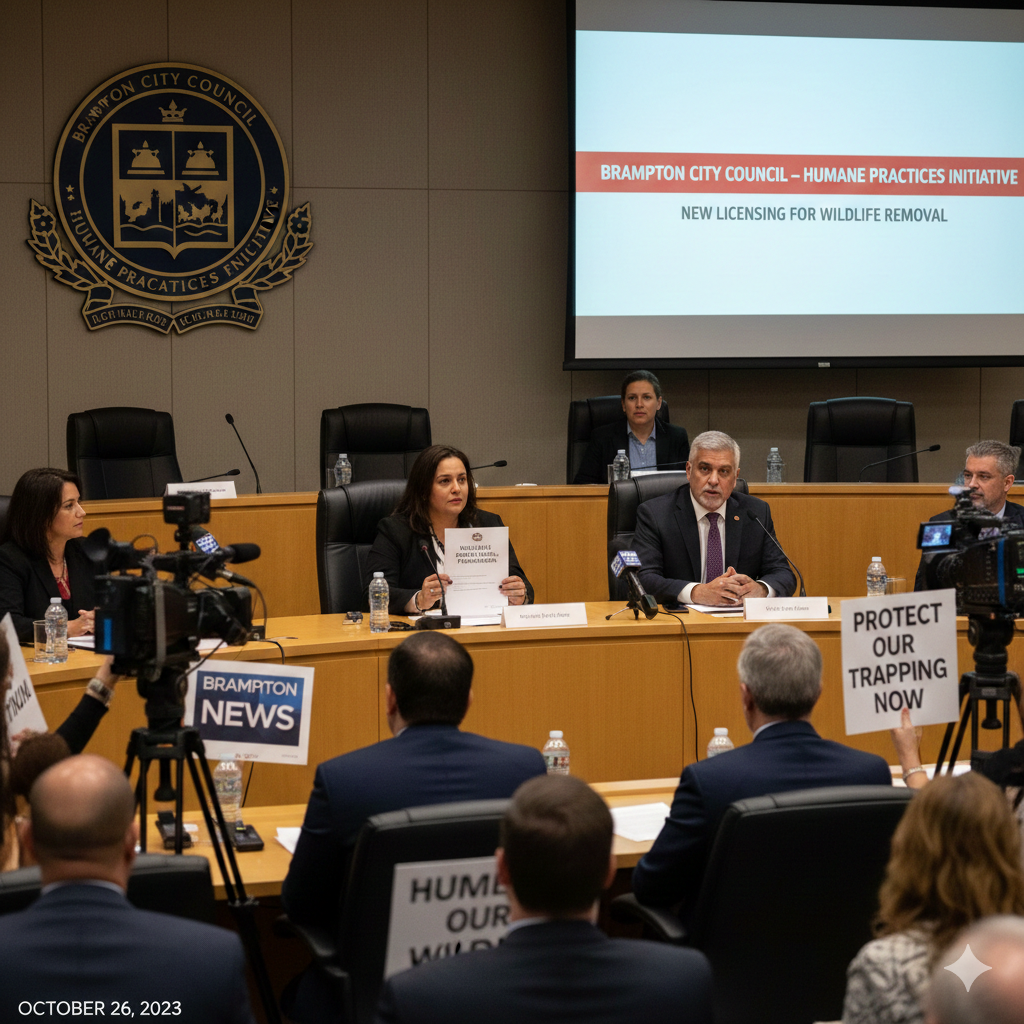
Brampton Considers Licensing Framework for Wildlife Removal Companies to Ensure Humane Practices

Brampton is taking a closer look at the regulation of wildlife removal services within the city, exploring new bylaw changes aimed at establishing consistent, ethical, and accountable standards for operators. The proposed reforms, which could introduce mandatory licensing for wildlife removal businesses, are designed to address growing concerns about unregulated practices and the welfare of local wildlife.


Current Wildlife Removal Landscape in Brampton

Brampton currently has 18 active wildlife removal businesses, operating under minimal regulation. This lack of oversight has prompted concerns from both residents and wildlife advocacy groups about the treatment of animals and the potential impact on public safety.

City staff presented a report to Brampton Council during the Committee of Council meeting on November 12, recommending the introduction of a municipal licensing framework for wildlife removal operators. The goal is to ensure that all companies follow standardized, humane procedures when handling wildlife in urban settings.


Why Licensing Is Being Proposed

The city’s staff report emphasized several key reasons for implementing a licensing program:

  • Setting Minimum Standards: Licensing would allow the city to define baseline requirements for training, humane animal exclusion, insurance, and record-keeping.

  • Preventing Inhumane Practices: Operators would be prohibited from using cruel or unlawful methods for capturing or relocating wildlife.

  • Increasing Accountability: By requiring detailed service plans and close-out reports for each wildlife removal case, residents would gain transparency regarding how wildlife is managed in their community.

“A licence allows the city to set minimum standards for training and humane exclusion, require insurance, record-keeping, and prohibit inhumane or unlawful methods,” the staff report explained. “A new licensing schedule is recommended to address complaints related to wildlife removal businesses that have highlighted inconsistent practices among service providers.”

The report further noted that the licensing framework would mandate humane exclusion as the default approach and ensure operators provide residents with written service plans and follow-up reports detailing the outcome of each intervention.


Support from Wildlife Experts and Advocates

Sandy Donald, Director of Ontario Wildlife Rescue, which collaborates with more than 50 wildlife rescue centres across the province, addressed the council in support of the proposed licensing measures.

Donald highlighted the unregulated nature of wildlife removal in Ontario, describing it as a “wild west” scenario. He explained that many companies operate without oversight, often capturing adult animals while leaving behind orphaned young, which frequently end up in rescue centres.

“Currently, most wildlife removal companies are unlicensed in Ontario. Anyone can set up a wildlife removal company. They go in, capture the mother, and a few days later the young are found because the young have been left behind,” Donald told council.

He added that between 20 to 40 per cent of orphaned wild animals—including skunks, raccoons, and rabbits—end up in wildlife rescue centres due to improper removal practices. In Brampton, these orphans are typically collected by Brampton Animal Services and transported to licensed wildlife rehabilitation facilities.

Donald commended Brampton Animal Services for being one of the best in the province regarding wildlife care, but he emphasized that a municipal licensing program would help reduce the strain on taxpayer-funded services while ensuring higher standards for wildlife removal.


Industry Perspectives Align With Advocacy Groups

Brad Gates, President of Gates Wildlife Control, which has served the Greater Toronto Area since 1984, also expressed strong support for the proposed bylaw changes. Gates echoed concerns raised by Donald, noting that while ethical standards have improved in recent years, insufficient regulatory oversight continues to allow questionable practices in the industry.

“Without licensing or enforcement, unethical practices continue. Many operators still define ‘humane’ according to convenience rather than animal welfare. Young are still being left behind in attics, exposed outdoors without heat, or separated from their mothers. Even more alarming is a growing pattern of fraudulent conduct within the industry,” Gates wrote in a letter to council.

Gates also pointed out the inconsistency in Brampton’s regulatory landscape. While licensing is required for various businesses such as taxi services, contractors, and pet groomers—entities that also interact closely with the public—wildlife removal companies, which handle living animals and often enter private property, remain largely unregulated.


Potential Licensing Structure and Costs

If approved, the licensing framework would require all wildlife removal operators in Brampton to obtain a municipal licence with an annual fee of $239. This fee is intended to support the administration of licensing, including compliance monitoring and enforcement.

The proposed licensing program would:

  • Mandate humane exclusion techniques as the first approach for wildlife management.

  • Restrict the use of inhumane or illegal methods of capture or removal.

  • Require operators to provide residents with written service plans prior to removal.

  • Ensure operators submit close-out reports to confirm that the wildlife removal was completed according to humane standards.

City staff believe these measures will significantly reduce incidents of improperly handled wildlife and improve outcomes for orphaned animals, ultimately benefiting both residents and local wildlife populations.


Community Implications

The introduction of a licensing program carries several potential benefits for Brampton residents:

  1. Enhanced Animal Welfare: Licensed operators would follow strict guidelines to ensure animals are treated ethically and humanely.

  2. Increased Transparency: Residents would receive written documentation detailing the wildlife removal process, enhancing trust in the service.

  3. Reduced Burden on Public Services: By enforcing stricter standards, fewer orphaned or improperly handled animals would require intervention from Brampton Animal Services.

  4. Accountability and Safety: Licensing provides a mechanism for monitoring and penalizing unethical operators, protecting both animals and the community.


Council Response and Next Steps

During the November council meeting, members voted to refer the staff report and proposed bylaw changes back for additional consultation and review. This step allows city staff to refine the licensing framework, address any remaining concerns, and gather further input from stakeholders before the council considers the measures for approval.

The referral ensures a careful, thorough approach to regulation, balancing the interests of wildlife, residents, and business operators.


Expert Consensus on the Need for Regulation

Wildlife experts and industry professionals alike argue that without a licensing system, Brampton risks continued inconsistency and unethical practices in wildlife removal. A regulated framework would establish uniform standards across the city, ensuring that operators are trained, accountable, and compliant with humane treatment protocols.

Both Donald and Gates emphasized that licensing is not intended to penalize operators but to professionalize the industry, protect wildlife, and reduce unnecessary strain on municipal services.


Conclusion

Brampton’s potential move to license wildlife removal businesses represents a significant step toward more responsible and ethical wildlife management. By requiring operators to adhere to standardized, humane practices, the city aims to safeguard animal welfare, increase accountability, and provide residents with reliable, transparent services.

As council continues its review and consultation process, the proposed bylaw changes may soon transform how wildlife removal is conducted in Brampton, aligning industry standards with broader ethical and public service expectations.

The outcome of these discussions could set a precedent for other municipalities in Ontario seeking to regulate wildlife removal and protect both animals and residents in urban environments.

Brampton Officials Still Waiting for Clarity on Delayed Hurontario LRT and Other Key Metrolinx Projects

Brampton leaders say they remain without definitive timelines for the long-delayed Hazel McCallion Light Rail Transit (LRT) project and its proposed downtown extension, raising growing concerns about transparency, planning challenges, and potential impacts on future transit development across the city.

Delays Continue to Cloud the Hazel McCallion LRT Project

For years, the Hazel McCallion LRT line—designed to connect Mississauga’s Port Credit GO station to the Brampton Gateway Terminal—has been viewed as one of the region’s most pivotal transit investments. Yet, despite expectations for its completion and launch in fall 2024, the project remains significantly behind schedule, with officials citing ongoing commercial negotiations and operational uncertainties.

Original Timelines No Longer Valid

When the project was first approved, the initial phase was envisioned to bring a reliable north-south transit spine connecting Mississauga and Brampton. However, as construction hurdles, contractual complexities, and logistical changes accumulated, the finish line has continuously moved. Now, Brampton councillors say they have no updated estimates from Metrolinx about when the line will be completed.

At a Nov. 12 general committee meeting, Wards 3 and 4 Councillor Martin Medeiros pressed city staff for clarity, noting that visible construction progress near Steeles Avenue had led many residents to assume the project was finally regaining momentum. But staff confirmed they have not received any new completion projections from Metrolinx.

What Progress Has Been Reported

Metrolinx’s most recent public update, provided in August, outlined partial progress:

  • Work completed at 33 of the 55 intersections along the route

  • Construction finished on 8 of the planned 19 stations

While these milestones indicate ongoing activity, they do not provide a full picture of how close—or far—the project is from completion.

Metrolinx Cites Ongoing Commercial Discussions

City officials explained that Metrolinx is still engaged in extensive negotiations with Mobilinx, the consortium responsible for building the LRT. According to Doug Rieger, Brampton’s Director of Transit Development, these discussions involve “re-baselining” the project schedule—a process that recalibrates timelines and expectations after delays or budget shifts.

Limited Information Available to Municipal Leaders

Rieger confirmed that Brampton staff have had internal discussions with Metrolinx and provincial officials, but no firm timelines have been shared. This uncertainty complicates planning efforts and creates challenges for coordinating related projects, including future transit expansions.

“The short answer is no,” Rieger said when asked whether Metrolinx had shared any new timelines. “We know they’re nearing the end of commercial discussions, but nothing official has been provided to us.”

Questions Surround Downtown Brampton Tunnelled LRT Extension

In addition to delays on the first phase of the Hazel McCallion Line, Brampton is awaiting clarity on the provincially funded downtown LRT extension—an eagerly anticipated project that would finally bring rapid transit into the city’s core.

A Major Project With Few Public Details

In January, Ontario Premier Doug Ford announced that the province would move ahead with funding the long-requested downtown extension, including a tunnel segment running beneath Brampton’s urban core. The project is designed to connect the existing LRT to the Brampton Innovation GO District station, enhancing regional connectivity and stimulating economic and residential development.

However, similar to the main line’s delays, Metrolinx has not publicly released construction timelines, staging plans, or anticipated start dates for the underground section. City staff say early indications suggest the province is preparing to advance the project, but no details have been confirmed.

Anticipation for Updates in Early 2026

Rieger indicated that Brampton has been requesting formal updates for nearly two years, and he hopes Metrolinx will present comprehensive information to council during the first quarter of next year. This update is expected to cover:

  • Progress on current LRT construction

  • Forecasted operational dates

  • Updated plans for the tunnelled extension

  • Status of other major regional transit investments

Queen Street Bus Rapid Transit Project Still in Limbo

Another major transportation initiative—the Queen Street–Highway 7 Bus Rapid Transit (BRT) corridor—remains stuck in the pre-construction phase, with few details available about when work might begin.

A Key Corridor Waiting for Momentum

The Queen Street BRT project has been widely viewed as essential for improving east-west mobility between Brampton, Vaughan, and York Region. Yet, despite planning studies, business cases, and preliminary design work, the project has effectively been on hold for the past year.

City officials say that while Metrolinx is nearing completion of the planning and design phase—including an Initial Business Case and Benefits Case Analysis—no forward movement on construction has been announced.

Metrolinx Response Offers Limited Clarity

In a written statement, Metrolinx acknowledged the ongoing progress on planning work for the Queen Street BRT. However, much like its position on the Hazel McCallion LRT, the agency did not commit to any projected timeline for construction or completion.

Brampton Officials Stress the Need for Transparency

The continued absence of clear timelines has left both elected officials and senior staff frustrated. Without reliable scheduling information, Brampton cannot adequately plan for development, coordinate transportation upgrades, or set expectations with residents and businesses.

Local Leadership Wants More Communication

For a rapidly growing city like Brampton—projected to surpass one million residents within the next decade—transit expansion is not just a convenience; it is essential infrastructure. City officials emphasize that better transparency from Metrolinx is crucial for ensuring long-term planning alignment.

“We’ve been asking for almost two years,” Rieger said, stressing the need for meaningful project updates. “We’re hoping Metrolinx will come in Q1 to provide those timelines.”

Metrolinx: More Information Will Come Closer to Completion

In its statement, Metrolinx highlighted that testing and commissioning must begin before an opening date can be reasonably estimated. According to the agency, only once construction is nearly finished will an approximate launch timeline for the Hazel McCallion Line become available.

The agency reiterated its commitment to working with municipal partners, ensuring project updates are shared as they become available.

A Region Waiting for Answers

As residents wait for a reliable north-south rapid transit connection, and as downtown Brampton anticipates long-overdue rail service, the pressure continues to build on Metrolinx to provide clarity.

Rising Toll of Intimate Partner Violence in Peel Region Sparks Urgent Calls for Action

Introduction

Intimate partner violence has taken a devastating turn in Brampton and Mississauga, where police now respond to an alarming number of domestic-related incidents every single day. The issue—long acknowledged as a persistent threat—has surged back into public focus after the tragic killing of 29-year-old mother of four, Savannah Kulla, whose death has once again exposed how vulnerable many residents remain behind closed doors.

In Peel Region, the problem isn’t just growing—it’s deepening. And with law enforcement attending two family or intimate partner violence calls every hour, local leaders, service providers, and advocates are pushing for more robust interventions before more lives are irreparably changed.

A Community Shaken by a Tragic Loss

A Killing That Reignited a Regional Alarm

The fatal shooting of Savannah Kulla on October 21, in a Brampton parking lot near Airport Road and Queen Street East, sent ripples of grief across the region. According to police, Kulla was killed by her estranged partner, 38-year-old Anthony Deschepper, who was on bail at the time and the father of her one-year-old daughter.

A makeshift memorial soon grew near the scene—photos, flowers, and handwritten notes forming a quiet testament to her life. Residents who passed by often paused in silence, a gesture that said what words couldn’t. As one mourner commented softly to a friend beside the candles, “How does this keep happening?”

That question has been echoing for weeks.

Kulla’s death has underscored the region’s struggle with intimate partner violence (IPV)—a problem that Peel Region council formally declared an epidemic in 2023. But as recent data shows, the crisis has only intensified.

Sobering Statistics Reveal a Growing Crisis

Police Responding to Thousands of Domestic Calls

Between January 1 and October 31 of this year, Peel Regional Police were dispatched to 14,107 family and intimate partner violence calls. Of those, roughly 60% were intimate partner–specific incidents, amounting to an average of 46 calls every day.

Police Chief Nishan Duraiappah, addressing regional council on November 20, put the situation in stark terms:
“We have seen a four per cent increase in reported incidents. It’s a sad stat that every hour we respond to two family and intimate partner violence calls.”

Even for seasoned officers, the pace is unrelenting.

Women Make Up the Vast Majority of Victims

During a presentation to Brampton council earlier in November, IPV detective Pamela Parkin highlighted that 78% of IPV victims in Brampton and Mississauga in 2024 were women. The most common charges officers lay during these calls involve assault, threats, assault with a weapon, and choking or strangulation.

The Alarming Patterns Around Strangulation

One of the most chilling data points involves strangulation—a known predictor of lethal violence.

Parkin noted that in 2024 alone, police laid 553 strangulation-related charges connected to intimate partner incidents. Research indicates that half of all IPV homicide victims had previously experienced at least one strangulation attempt.

Parkin didn’t mince words:
“Victims of strangulation have a seven times increased risk of being killed by their partner.”

For front-line officers, this risk extends to them as well. Responding to calls involving a suspect with a documented history of strangulation increases the danger to police, adding yet another layer of urgency to prevention efforts.

Local Leaders Push for Stronger Measures

Growing Pressure to Strengthen Bail Laws and Resources

The conversation around bail reform has resurfaced after the Kulla case, with several regional officials arguing that the current system isn’t adequately protecting victims. Brampton Mayor Patrick Brown voiced deep concern, describing IPV as an area where society is “failing badly.”

Brown reflected on how attitudes toward impaired driving evolved over decades, noting that once society collectively agreed on consequences, behavior changed. IPV, he suggested, has not seen that shift:
“We haven’t gotten there with intimate partner violence.”

He pointed to the pandemic years, when lockdowns left many victims trapped with abusers, causing an unprecedented spike in domestic cases—a trend that never fully subsided.

The Need for More Shelter Space

Mississauga Councillor Natalie Hart recently drew attention to a persistent barrier for survivors: the lack of emergency shelter space. She urged the region to expand support systems for mostly female victims who are attempting to escape abusive environments.

“If people are searching for these things, it’s usually in the moment when they need help,” she said. And when residents come to the city’s website seeking assistance, they often mistakenly believe the city directly provides shelter services—only to discover that help isn’t immediately available.

Her point landed with weight: access delayed is often safety denied.

The Human Face Behind the Numbers

A Fictional Moment Illustrating a Real Problem

During a community safety meeting earlier this month, a woman named “Mira”—a fictional composite based on real cases—shared a story that captured the nuanced fear many residents carry. She described sitting in her car outside a grocery store, debating whether to return home after a heated argument with her partner the night before.

“I remember staring at my steering wheel like it was a crystal ball,” she said. “I kept thinking, ‘What’s waiting for me behind that door?’ I knew I needed help, but I didn’t even know where to start.”

Her words echoed what frontline advocates often hear: fear mixed with uncertainty, and the constant mental calculus survivors perform before seeking help.

A local outreach worker leaned toward her and gently said, “Your fear isn’t paranoia; it’s experience.”

The room fell quiet—not unlike audiences hearing a poignant line from a George Carlin monologue, where truth hits harder because it’s wrapped in simple clarity.

Why the Situation Is Worsening

Systemic Gaps That Keep Survivors Vulnerable

Experts point to several overlapping issues:

  • Insufficient shelter capacity, forcing survivors to remain in unsafe homes

  • Bail conditions that fail to prevent repeat violence

  • Limited long-term support, including mental health counselling

  • High cost of living, which makes leaving an abusive partner financially impossible

Police can intervene, but without parallel social services, intervention becomes temporary.

Officers Facing Rising Risks

Front-line responders now walk into more volatile situations than ever before. Incidents involving weapons, threats, and strangulation attempts place officers at heightened risk. As one officer joked wryly during a council briefing—borrowing a line from Tina Fey—“I have a career that sometimes feels like a poorly written action movie.” The humor lightened the room briefly, but the underlying truth remained stark.

Community Leaders Call for Long-Term Strategy

A Regional Approach to a Deeply Ingrained Issue

Peel Region has acknowledged the problem formally, but officials argue that a declaration alone won’t reverse the trend. They want long-term investments in:

  • more transitional housing

  • improved judicial monitoring

  • enhanced survivor outreach

  • education programs that challenge cultural norms around abuse

Regional councillors have spoken about the need for federal and provincial funding, insisting that municipalities cannot confront an epidemic alone.

Conclusion

Intimate partner violence in Brampton and Mississauga has reached a critical point. The rising number of calls, the overwhelming percentage of female victims, the lethal patterns surrounding strangulation, and the harrowing personal stories all illustrate a community in urgent need of solutions.

The death of Savannah Kulla is a devastating reminder of the consequences of inaction. As officials debate policy reforms, and as police continue responding to thousands of calls, the region faces a difficult question: How many lives must be altered—or lost—before systemic change becomes inevitable?